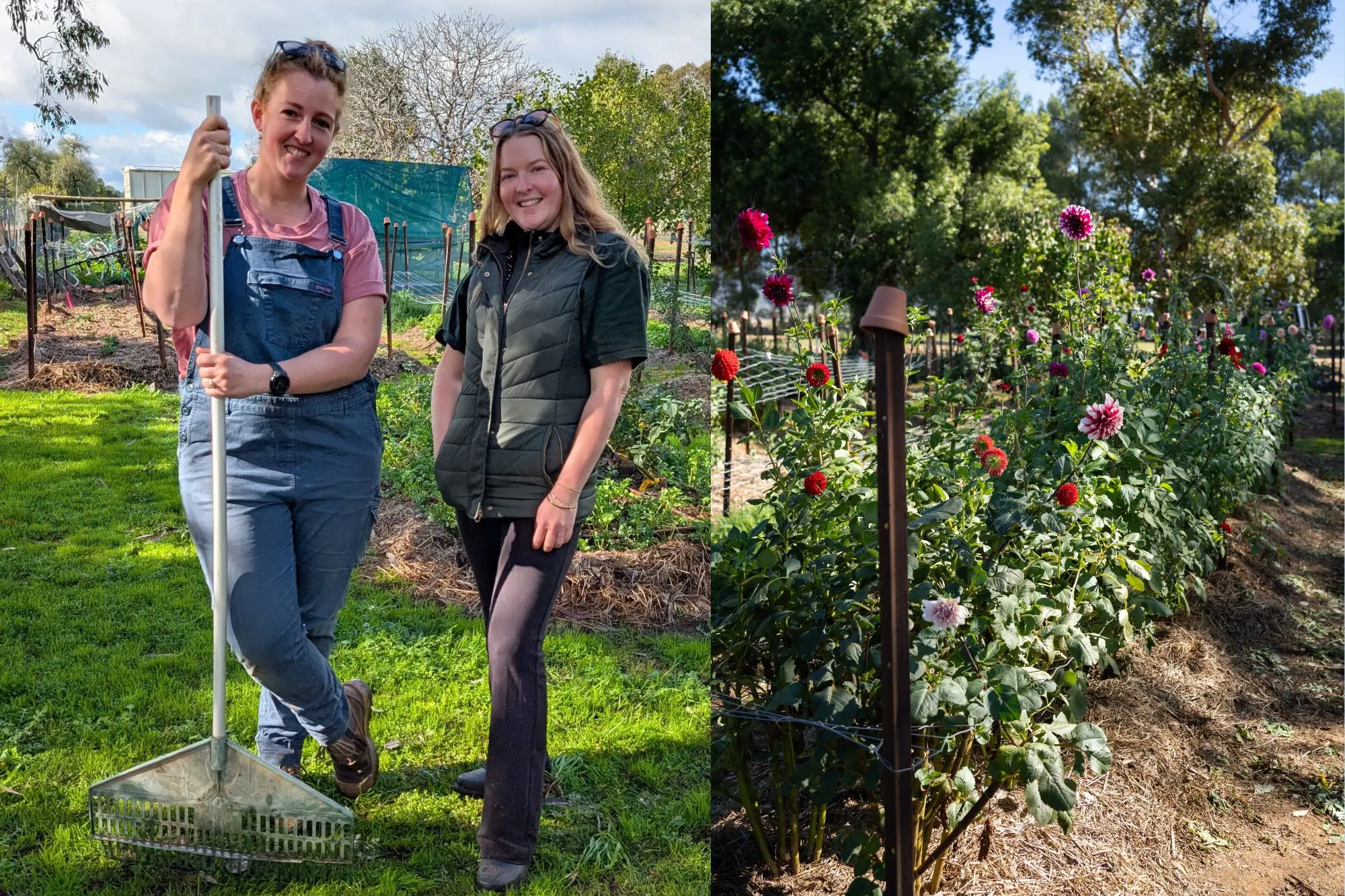
What started as a simple idea between two friends has bloomed into a thriving flower farm supplying fresh, locally grown flowers across the region.

For the past three years Elyse McKnight and Carrie Downing have been building Bud to Blossoms Flower Farm transforming a shared passion for gardening and flowers into a business that now serves customers in Grenfell, Cowra and Young.

The pair started the farm after Elyse who runs her own floristry business, Paper Daisy Studio, found herself wanting greater access to fresh, locally grown flowers rather than relying on imported blooms.

"We always talked about doing something together so we decided to give it a try," Elyse said.

The result has been Bud to Blossoms Flower Farm where rows of seasonal flowers brighten garden beds from spring through to autumn.

At the farm a wide range of flowers including chrysanthemums, ranunculus, dahlias, roses, peonies, daffodils, anemones and yarrow are grown.

This year alone the farm has doubled its ranunculus production with more than 2000 plants now in the ground.

The pair is also preparing for an exciting expansion, trailing new varieties such as sunflowers, daisies, foxglove and scabiosa to see which performs best in the region.

"We have our consistent crops but we're always testing new flowers," Carrie said.

"If a flower thrives, we'll grow it again. If it doesn't suit our climate, we move on."

While the colourful flowers attract attention during the warmer months, winter on the farm is far from quiet.

Much of the colder season is spent preparing for the year ahead through weed control, mulching, soil improvement, irrigation maintenance and pruning.

"Most of the flowers in the ground now we planted around Easter," Elyse said in June.

"Winter is about making sure everything is healthy and ready for the growing season."

Recent rainfall has helped replenish soil moisture although the pair remain wary of drainage and the potential for disease in wetter conditions.

Growing flowers in the central west comes with its own set of challenges.

Water management, extreme summer heat and the area's heavy red clay soils all require careful planning and ongoing attention.

The farm also encounters occasional pests from aphids to flocks of cockatoos with a habit of snapping flower heads.

Rather than relying heavily on chemical treatments the pair prioritise healthy soil, efficient irrigation systems and natural pest management wherever possible.

"Healthy soil really is the foundation," Carrie said.

"If your foundations are strong, everything else builds positively from there."

The farm uses drip irrigation systems on timers to minimise water waste while beneficial insects are encouraged to help keep pest populations under control.

Behind the picturesque rows of flowers however lies plenty of hard work.

"People see the beautiful flowers at the end but it's often a lot of backbreaking work," Elyse said.

"Your on your knees, bent over, working in all kinds of weather."

Support from their families has played a significant role in the farm's success.

"Our husbands, our mums and our kids have all helped out at different times," Elyse added.

"It's been a really beautiful experience for our families as well."

Looking ahead the pair are especially excited about plans to welcome visitors onto the farm.

Their long-term vision includes seasonal pick-your-own flower days giving everyone the opportunity to wander among the flowers and create their own flower arrangements.

"We'd love people to come out, enjoy the garden and pick their own flowers.

"That's something we're really excited about," Elyse added.