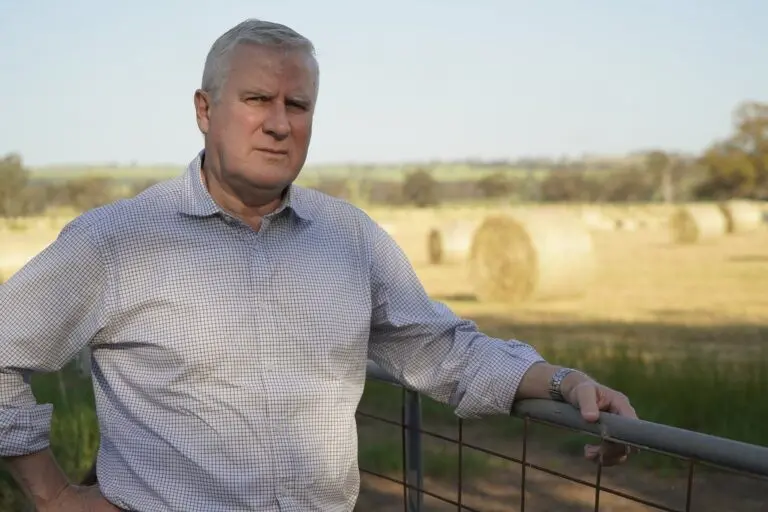
Federal Member for Riverina Michael McCormack has called for a “sensible balance” between protecting Australians from gambling harm and preserving adults’ right to make their own choices.

Speaking in the House of Representatives during debate on the Interactive Gambling Amendment (Gambling Reform) Bill 2026, Mr McCormack said gambling could cause serious financial and personal harm, but warned against excessive regulation.

Drawing on an 1898 book, The History of Gambling in England, Mr McCormack opened his contribution with a lengthy historical reflection on the dangers associated with gambling.

He said the risks were well understood, arguing that people should not gamble more than they could afford to lose and should gamble responsibly.

However, Mr McCormack said governments should be cautious about restricting individual choice.

“We live in a liberal democracy, and people have choices,” he told parliament.

“Some make good choices and some do not.”

He acknowledged that problem gambling could have significant consequences for individuals, partners, children and families, including financial and health impacts.

The Riverina MP also strongly defended the racing industry welcoming the bill’s exemption for horseracing.

He said thoroughbred, harness and greyhound racing supported thousands of jobs, particularly in regional Australia, while regional race clubs provided important sporting, social and community activities.

He also raised the Stawell Gift, an annual athletics event in Victoria which has traditionally included betting, saying he would be concerned if tighter gambling regulations threatened long-established community events.

Mr McCormack urged lawmakers to consider the potential unintended consequences of regulation, warning that excessive restrictions could drive consumers towards illegal markets.

He pointed to Australia’s experience with illegal tobacco and vaping, where he said black-market activity had flourished and contributed to firebombings and other criminal activity as consumers sought cheaper alternatives outside the legal market.

The Riverina MP also expressed concern about proposed restrictions involving foreign-matched lotteries and online Keno, saying newsagents relied heavily on lottery products for turnover as traditional newspaper sales declined.

He said he had spoken with Ben Kearney from the Lottery and Newsagents Association about the potential effects of the proposed measures.

While supporting restrictions on gambling advertising in some circumstances, Mr McCormack said he believed adults should retain the ability to gamble.

He pointed to a previous proposal for a ban on gambling advertising during televised football and said he could support limits on betting once a sporting event was underway.

The measures before parliament would introduce a range of new gambling restrictions.

The Interactive Gambling Amendment (Gambling Reform) Bill 2026 would amend the Interactive Gambling Act 2001 to restrict wagering advertising, including banning wagering advertising content during live sports coverage and requiring online services to prevent restricted users from receiving gambling advertising.

The bill would also expand the framework governing the National Self-Exclusion Register, known as BetStop, prohibit online Keno and foreign-matched lotteries, and clarify the definition of trade promotion gambling services.

It would further give financial institutions and online services new obligations aimed at preventing payments and access to designated interactive gambling services, alongside consequential amendments to four other Acts and the repeal of the Broadcasting Services (Online Content Service Provider Rules) 2018.

Introduced alongside the reform bill is the National Self-exclusion Register (Cost Recovery Levy) Amendment Bill 2026.

That legislation would amend the National Self-Exclusion Register (Cost Recovery Levy) Act 2019 to impose a levy on licensed interactive wagering service providers, allowing the government to recover the costs associated with operating BetStop.

Mr McCormack said the debate ultimately came down to finding the right balance.

“We need to make sure that we reach a sensible balance,” he told parliament.

“We can't be naysayers. We can't be nanny state all the time about everything.”

He said gambling reform should address genuine harm without imposing blanket restrictions on people who gamble responsibly.