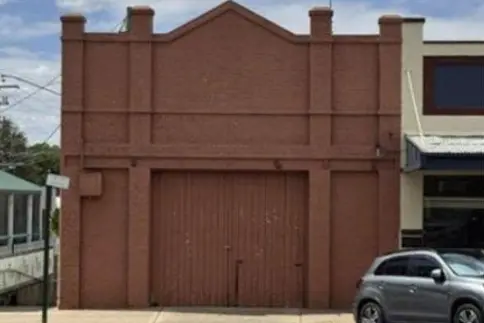
A long-vacant Grenfell building is set for a new lease on life after Weddin Shire Council approved a major redevelopment proposal but not without a debate about heritage and streetscape.

At its June Ordinary Meeting, councillors considered Development Application 2/2026, which proposes restoring and partially demolishing an existing building at 146 Burrangong Street before constructing a new extension.

The project will see the site transformed into a “creative industry” space focused on designing and prototyping lighting products alongside a residential dwelling, parking and storage.

The building, which has reportedly sat unused for more than 20 years, sits in a prominent position linking Burrangong and George Streets which is one of Grenfell’s key heritage areas.

Councillor Jan Parlett said she had received “quite a few submissions” and phone calls from concerned residents, and had spoken directly with the owner to better understand the proposal.

While praising the significant investment and commitment to restoring a derelict structure, Cr Parlett raised concerns about the visual impact of the design particularly its modern industrial elements.

“I commend him for taking on an old building, that’s a mammoth task,” she said.

“But I was surprised at the facade. It’s more in keeping with a modern industrial look, and that’s where I have concerns because that’s what we’ll see from the street.”

Cr Parlett suggested the design could be softened with changes such as powder-coated railings, verandah posts or traditional window hoods to better reflect the town’s historic character.

“Our identity is our heritage streetscape,” she said.

“If we let little things slip through, it sets a precedent.”

Deputy Mayor Colleen Gorman echoed those concerns, noting the building’s visibility.

“It’s right on the bend of the main street, so it will be very noticeable,” Cr Gorman said.

“I was surprised when I saw the roof design and that the barn doors wouldn’t be there anymore, replaced by modern glazing.”

However, both councillors acknowledged the positive aspect of preserving parts of the building, including an existing mural and original doors.

Other councillors spoke strongly in favour of the project, focusing on the benefits of revitalising a long-neglected site.

Councillor John Niven described the proposal as “brilliant for the town,” noting the use of materials such as corrugated iron and heritage bricks.

“If you’ve seen the back of that place... what it looks like now compared to what this will be, it’s a great outcome,” Cr Niven said.

Councillor Michael Neill agreed, saying the design balanced heritage considerations with practical redevelopment.

“You’re never going to get it exact again unless you rebuild it entirely,” he said.

“This is about keeping it as close as possible.”

Cr Niven added that bringing the building back into use after two decades should be celebrated.

“It hasn’t been used for 20 years. The owner should be congratulated,” he said.

Council’s Director of Environmental Services advised that the proposal had been assessed against planning controls and heritage considerations, including variations to building height and scale.

Independent heritage and architectural advice found the amended design to have acceptable impacts and consistent scale with surrounding buildings, including the Albion Hotel.

Further, the existing building facing the main street would remain the dominant streetscape feature, maintaining the character of Burrangong Street.

Despite calls for additional design refinements, the motion to approve the development was carried 6 votes to 4.

Cr Gorman, while ultimately supporting the project, reiterated her preference for further heritage-focused modifications, particularly to the roofline.

The project is expected to bring new activity to Grenfell’s main street and contribute to the town’s push to preserve its heritage while encouraging investment.

Construction timelines have not been confirmed.