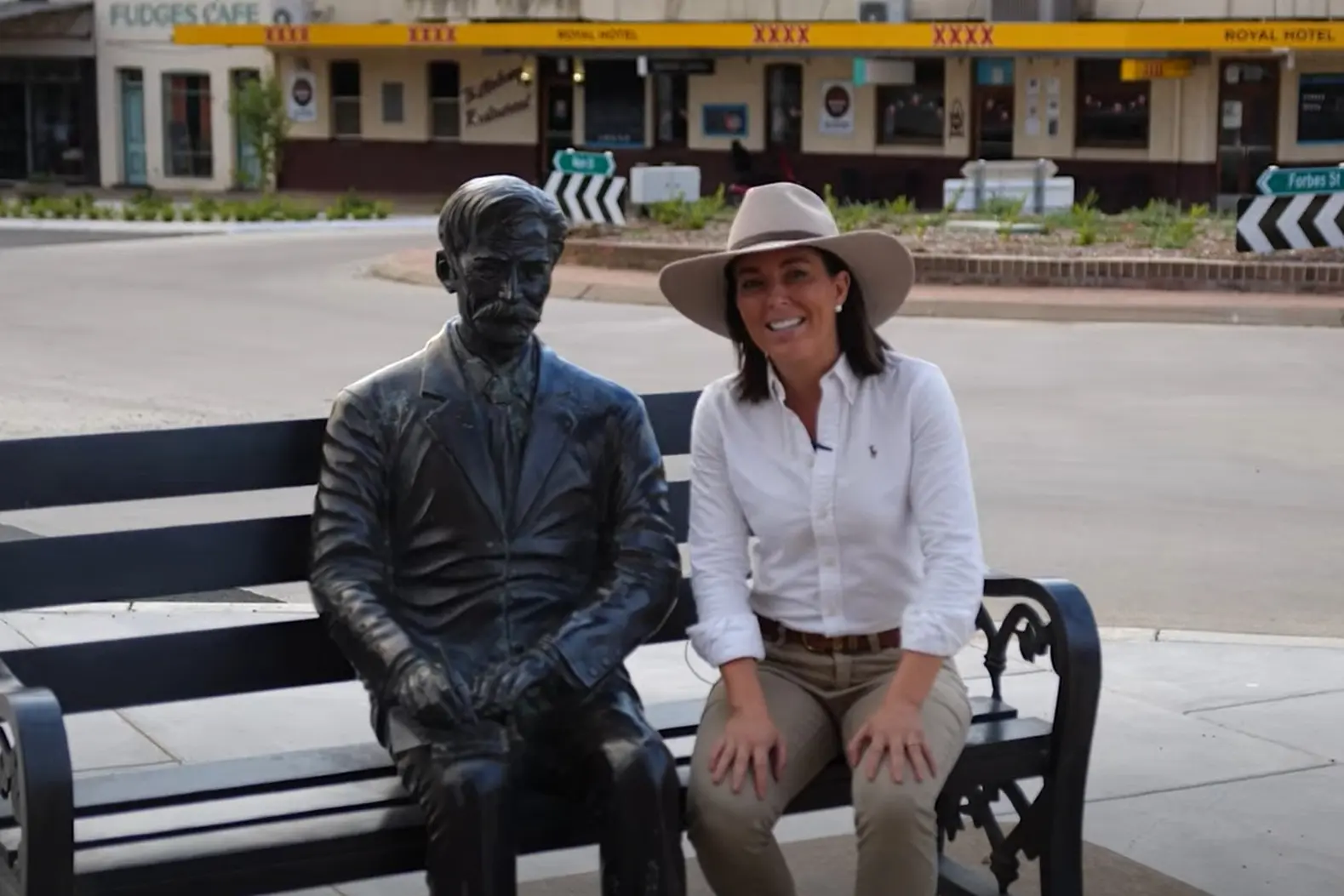
From historic streetscapes and long-forgotten faces to the stories behind some of Australia's best-known poets, Grenfell's past is being brought back to life through the work of West Wyalong Movies. You may have seen the short teaser video appearing on Facebook, featuring presenter Lyndsey Douglas in Grenfell before a poem is read and films from years gone by start to roll. The footage is part of a larger historical project by West Wyalong Movies, which is using the writings of three literary figures, Banjo Paterson, Henry Lawson and Mary Gilmore, archival material and local stories to explore their connections to the region. West Wyalong Movies' Ross Harmer said the project was filmed about 18 months ago and was now being prepared for release. The journey follows the Mary Gilmore Way, drawing on five poems written by Banjo Paterson about the Bland district, alongside works by Lawson and Gilmore. While Lawson was born at Grenfell's Goldfields, he left as a toddler and never returned to the district. Paterson, who was not born in Grenfell, spent time living in the wider district at Glenesk, near Bimbi, while Gilmore's family also had connections to the area, living around Coolamon, Greenethorpe and the surrounding district. "There is a sort of a three-way relationship there between Lawson, Paterson and Dame Mary," Mr Harmer said. The project explores how their different lives and perspectives were reflected in their writing, with Paterson's poems offering a glimpse into rural life, drought and the changing agricultural landscape. One poem, The Song of Wheat, was written while Paterson was living at Glenesk, where drought ultimately destroyed his wheat crop. The film also visits places connected to the stories, including Bimbi, where the old post office still stands. Mr Harmer said local residents Margaret and Alan Jones were interviewed about the building, where Paterson once posted his mail. Archival footage also features in the project, including film believed to be from one of the earliest Henry Lawson Festivals, showing the parade and the television crews who captured it. But the work of West Wyalong Movies extends well beyond the stories of famous literary figures. Established in 2008, the volunteer-driven project began as a fundraising initiative for groups using the West Wyalong Showground, with proceeds from its productions supporting those organisations. Mr Harmer collects old home movies, photographs and archival footage, bringing them together with interviews from people who witnessed events or have firsthand knowledge of the stories being told. The result is a growing collection of films documenting farming, machinery, rural lifestyles and the history of communities across the region. West Wyalong Movies has released about 38 titles to date, with another six or so waiting to be released as the group works towards establishing a new website and moving its collection towards a streaming service. Mr Harmer said some of the most valuable historical footage came from seemingly ordinary home movies. Birthday parties, weddings, children playing and families filming their new cars or properties can offer an unexpected glimpse into how people lived decades ago. Footage of local sporting matches, farming activities and community events can also help piece together a broader picture of the district's past. "You get half a dozen people's home movies and you get a small library of footage that we can use on things that happen around the district and the history of the district," he said. For viewers, the experience can also be a personal one, with people sometimes recognising relatives who have since passed away appearing in footage filmed 20, 30 or 40 years earlier. Mr Harmer said the group was always interested in hearing from people who might have old footage tucked away at home. West Wyalong Movies offers to transfer home movies onto a USB drive free of charge, provided the group receives permission to use the footage in its productions. He said people never knew what historical material might be sitting forgotten in a cupboard, with even the most ordinary footage potentially helping tell an important local story. The Grenfell-related film is expected to be released around the time of next year's Henry Lawson Festival, with Mr Harmer hoping to organise a community screening. For those with old home movies gathering dust, it could be an opportunity to share a piece of local history that might otherwise remain unseen.