
PHOTO
The Inland Rail will now terminate at Parkes in the north and will not continue to Brisbane.
It's the federal government decision that derails decades of advocacy and planning - including from individuals in Parkes - and millions of dollars already spent on the national project after seven and a half years of construction.
It has regional MPs slamming the move and Parkes' mayor Neil Westcott sharing his shock and "profound disappointment" for the Parkes community and the nation.
Cr Westcott said the decision to axe funding the Inland Rail beyond Parkes reflects a "troubling" lack of long‑term vision for the nation - one that has also seen the Blue Mountains tunnel project shelved.
“For decades, Parkes has advocated for Inland Rail in good faith. We have hosted symposiums, led national conversations, mobilised industry, and built our regional future around the promise that Australia would finally commit to long-term nation‑building infrastructure, first espouse by Sir Henry Parkes over 130 years ago," he said.
“To see such a strategically vital project abandoned at the stroke of a political pen sends a chilling message: that Australia has become a nation where major infrastructure start and stop at political whim.
“Productivity does not improve by accident. It improves when governments commit to infrastructure that unlocks regional capacity, strengthens supply chains, and produces benefits for generations, not just electoral cycles."
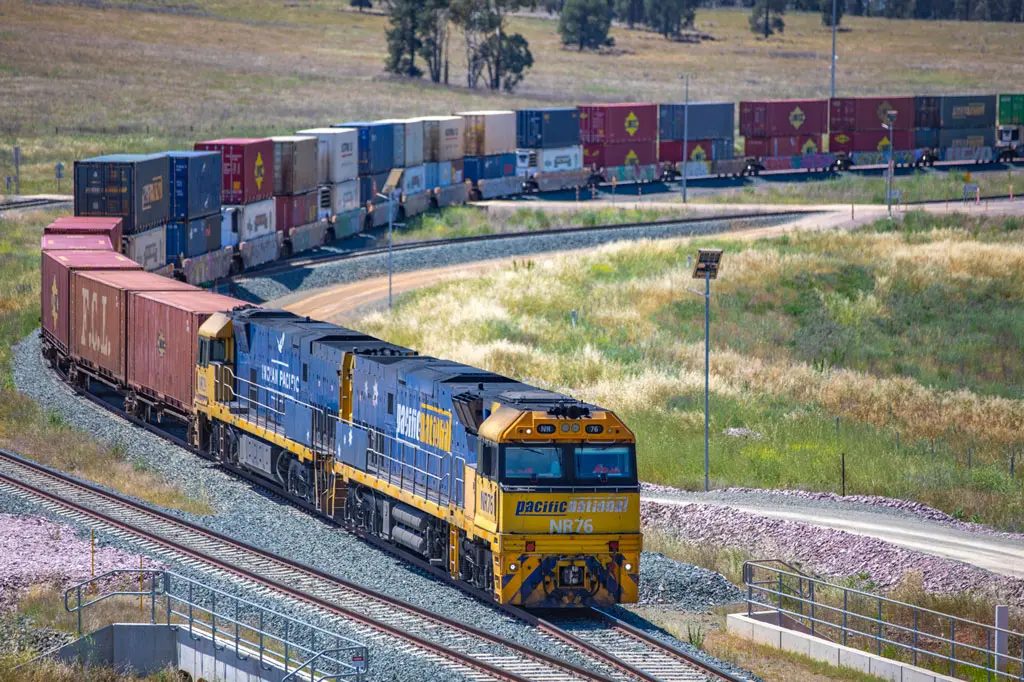
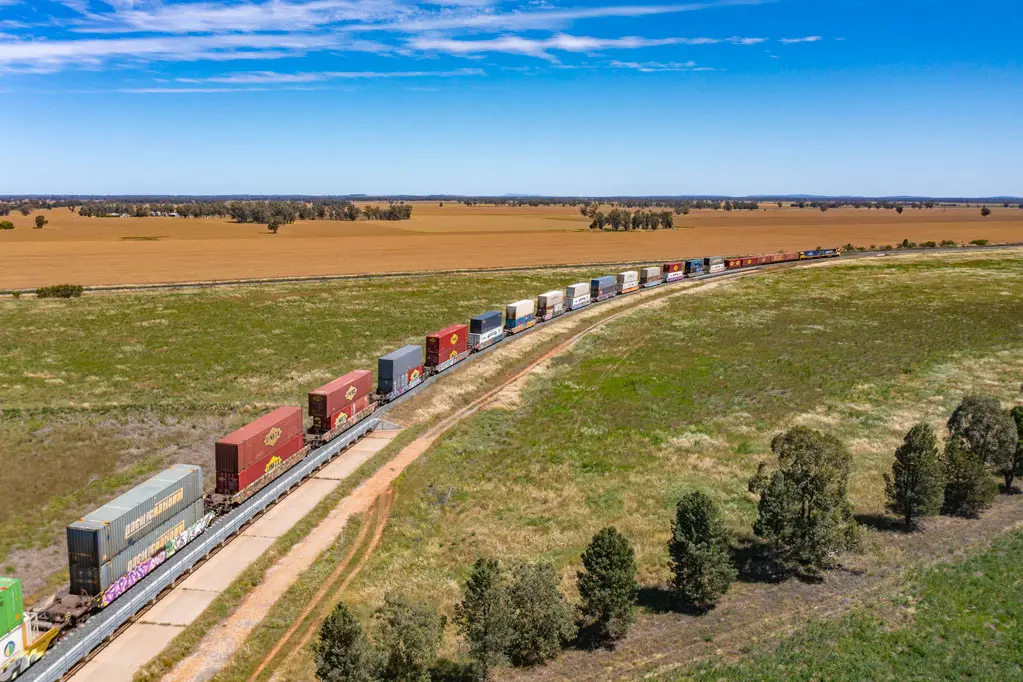
The Inland Rail was to enhance national freight and supply chain capabilities, better linking businesses, manufacturers and producers to national and global markets, and helping to shift more everyday goods onto rail with double-stacked trains.
But an independent review by Dr Kerry Schott in 2023 found it was significantly delayed and over budget, ballooning to more than $45 billion, more than three times the current budget allocation, to deliver the full Inland Rail project from Melbourne to Brisbane.
Federal Minister for Infrastructure Catherine King said in a statement the review also confirmed the project wouldn't be operational until at least 2036.
Dr Schott found the estimated cost had increased from $16.4 billion in 2020 to at least $31.4 billion in 2022.
The government said its priority for Inland Rail has been completing rail upgrades between Melbourne and Parkes, so double stacked freight trains can run between Beveridge Intermodal in Victoria to Perth via Parkes and Adelaide.
The Parkes to Narromine section was the first of 12 sections to be built and was completed and commissioned in September 2020.
However a spokesperson for Minister King confirmed that freight operators on other sections of the track that have been upgraded, including north of Parkes to Narromine and Narrabri to North Star, will see upgraded infrastructure like new culverts, level crossing upgrades and additional crossing loops.
"These sections remain part of the existing ARTC network, and navigable for single stacked trains," they said.
"In areas where work has not commenced, namely the 306km section of new track between Narromine and Narrabri, the government will focus its efforts on corridor preservation."
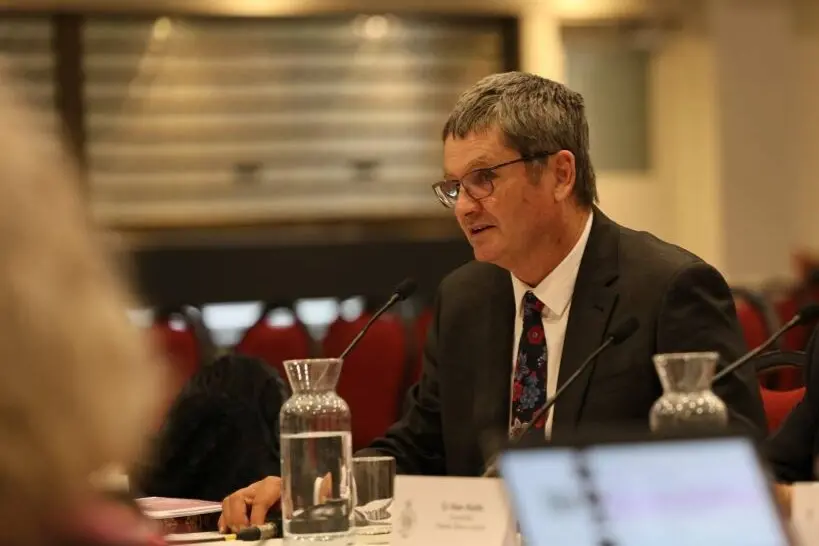
Cr Westcott said the Inland Rail is critical national infrastructure.
"For freight and agriculture, it offers a faster, higher‑capacity alternative to an already constrained and weather‑exposed coastal route, giving inland producers reliable access to ports and international markets," he said.
“From a defence and national resilience perspective, a second north-south rail spine is essential, providing redundancy if coastal corridors are disrupted by natural disasters or strategic shocks.
"It also supports future inland fuel storage and distribution, strengthening energy security.
“Together, these outcomes lift national productivity by reducing transit times, freight costs and supply‑chain vulnerabilities, benefits the country in current circumstances can ill afford to abandon."
Cr Westcott said he is deeply worried about what the decision says for the future of Australia.
"We have recently seen the Blue Mountains tunnel project cancelled, despite it being designed to bypass a 200‑year‑old convict‑built bridge," he said.
"The result? Our main transport artery west of Sydney is now closed, with serious economic consequences.
“At the same time, we see post offices, banks and government agencies closing across regional Australia, lifelines for many communities. And now Inland Rail.
"These decisions are not isolated. They point to a growing divide between policy ambition and regional reality.
“As a nation, we must work out where we are going. That requires long‑term investment strategies that endure governments, not vanish when political priorities shift. Projects like the Pacific Highway, Western Sydney Airport, the M12, now open, and the planned Newcastle rail show what is possible when commitment is sustained.
“But unfortunately, if you live on the western side of the Blue Mountains, the pattern is clear. We have less voting power, and increasingly, we are treated accordingly."
Parkes will not stop advocating for infrastructure that serves the whole nation, Cr Westcott said, and they want to work constructively with decision‑makers.
"But today’s decision makes one thing painfully clear: Australia must decide whether it truly believes in national productivity and regional development, or whether it is prepared to walk away from them," he added.
“We want to understand the basis for this decision, to test it rigorously against the national interest, and to contribute our regional knowledge to better outcomes.
"Parkes remains at the crossroads of the nation’s railways and at the heart of a globally competitive agricultural region exporting more than 70 per cent of its produce, unfortunately, with little or no value adding.
“The Parkes Special Activation Precinct, strongly supported by the NSW Government, is a serious, future‑focused platform to change that and unlock national productivity."
A ceremonial sod turn took place at the crossroads of the country's east-to-west and north-to-south rail lines in Parkes on 13 December 2018, marking the historic moment of the official start of construction of the 1600km Melbourne to Brisbane Inland Rail project with the Parkes to Narromine line.
The 170-km Stockinbingal to Parkes section, in the south and takes in Forbes, began in September 2023 and was completed in January this year.
Three sections of the Inland Rail are currently fully operational, and as of March every NSW section of the project had formal Australian Government approval.
Prior to 2020 double-stacked trains operated mainly between Perth and Parkes.
Dr Collette Burke, who was appointed the new Chair of the Board of Inland Rail to guide the refocused direction of the project, said Inland Rail remains committed to successfully completing all sections of the project from Beveridge to Parkes by 2027.