PHOTO
Inland Rail works will stop at Parkes in the north in a Federal Government decision that’s been slammed by regional MPs.
Minister for Infrastructure, Transport and Regional Development Catherine King announced last Wednesday 6 May, that the government had taken the decision to consolidate the Inland Rail project by completing construction between Beveridge in Victoria and Parkes in New South Wales by the end of 2027.
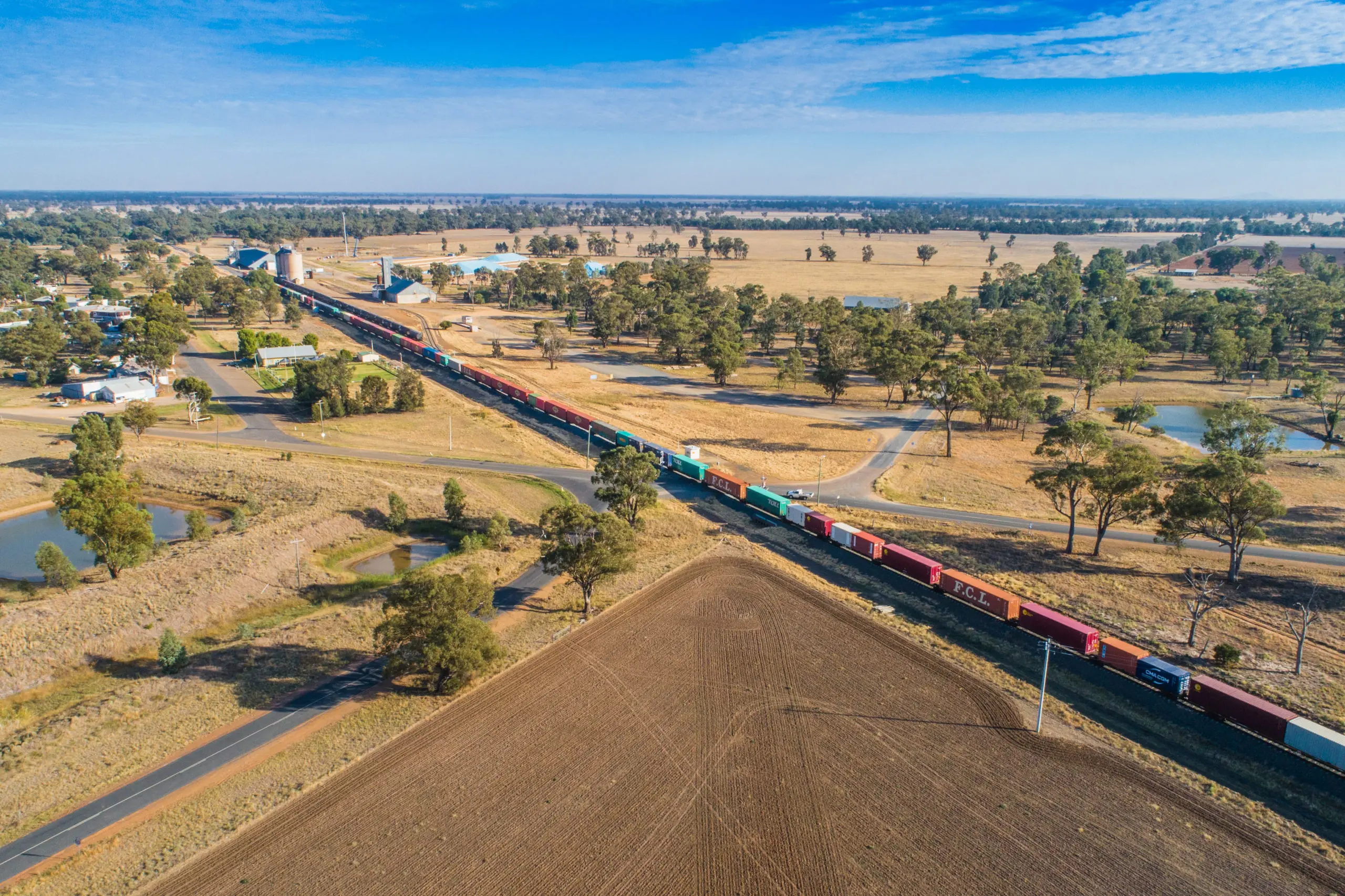
This will enable double-stacked freight trains to travel between Melbourne and Perth, via Parkes.
The track from Melbourne to Parkes passes through the communities of Bribbarree, Quandialla and Caragabal.
But independent cost assurance work completed by ACIL Allen Pty Ltd puts the cost estimate in excess of $45 billion to deliver the full Inland Rail project from Melbourne to Brisbane – which the government says is three times the current budget allocation.
Regional MPs have slammed the announcement, Member for Riverina Michael McCormack said the decision would come at the cost of regional jobs.
“The Inland Rail is nation-building infrastructure – I was the Minister who signed the inter-governmental agreements with then Victorian Infrastructure Minister Jacinta Allan in Melbourne on 16 March 2018, then New South Wales Deputy Premier John Barilaro in Parkes on 4 May 2018, and then Queensland Transport Minister Mark Bailey on 29 November 2019 in Toowoomba,” he said.
“This Government has thumbed its nose at the regions from the moment it came into office."
Cr Kevin Beatty, Cabonne mayor and chair of the Central Joint Organisation of Councils, said the need for an inland north-south freight spine remained compelling.
“Inland Rail was designed to complement the coastal route, providing additional capacity, reliability and redundancy for freight, agriculture and essential supply chains," he said.
"Recent events have made clear the risks of over reliance on a single, slow and weather exposed coastal corridor.”
“The cancellation of the Blue Mountains tunnel project is a stark example.
"That project would have bypassed a 200-year-old convict built bridge and strengthened the primary transport artery west of Sydney.
"Its abandonment has now contributed to the closure of that route at Victoria Pass, exposing the fragility of current infrastructure and the real costs of deferred investment.”
Cr Beatty said the manner in which the decision had been made was deeply troubling.
“Our member councils span a vast inland corridor from Lachlan Shire through to Lithgow, encompassing agricultural regions, logistics hubs and numerous small communities," Cr Beatty said.
"For these regions, Inland Rail was a long discussed, nationally significant project that underpinned planning, investment confidence and long-term economic resilience.
"Strategic, nation building infrastructure must be guided by long term thinking, rigorous analysis and genuine engagement, not abrupt, summary decisions that undermine confidence and trust.
"Effective cooperation between governments and regions depends on transparency, consistency and mutual respect."
In her statement, Minister King said Inland Rail works north of Parkes would focus on preservation of the rail corridor, as well as protecting sites for future Inland Rail intermodal terminals in Queensland.
“We are taking sensible decisions to realign the future of Inland Rail and build a safe, efficient and reliable network for the future,” Ms King said.
Her statement announced a further $1.75 billion investment in rail.
The works will involve upgrades to improve the efficiency of the East Coast network, including track renewal works, passing loop extensions, improved signalling to remove key speed restrictions, improve transit times, support larger trains and enhance service reliability and safety.
Works will also include resilience upgrades in high-risk flood-prone sections particularly along the East-West Corridor, which has faced many multi-week closures over the last decade following downpours in central Australia.