PHOTO
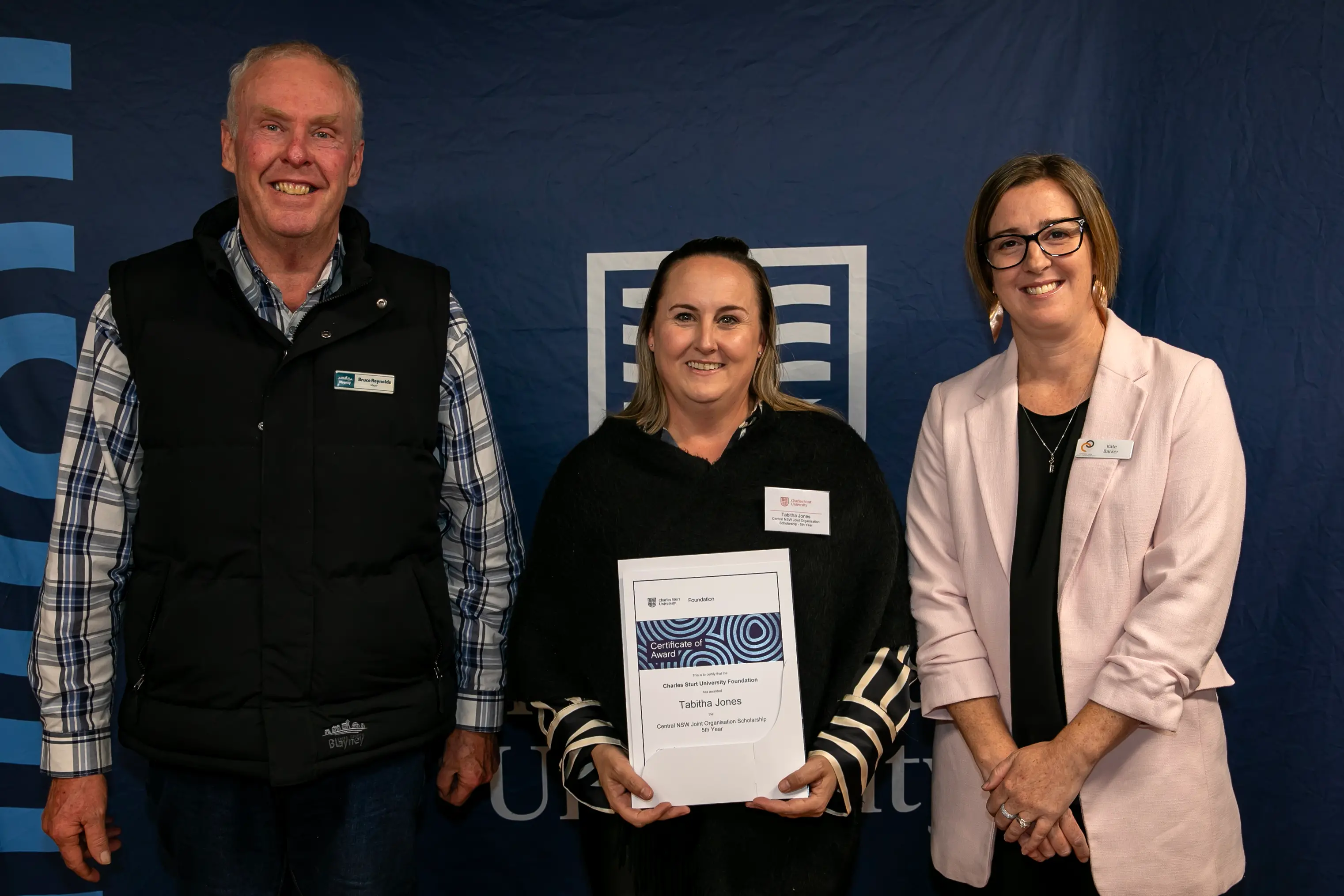
A scholarship aimed at helping grow the next generation of rural doctors in the central west has been awarded to three students studying at the School of Rural Medicine in Orange, two of those hailing from the Weddin Shire.
Grenfell’s Tabitha Jones and Quandialla’s Brett Causer were lucky to be awarded the Central NSW Joint Organisation (CNSWJO) Scholarship.
Both recipients say the support will help ease the financial pressures of studying medicine while reinforcing their commitment to regional healthcare.
Tabitha who is in her fifth and final year of Doctor of Medicine at Charles Sturt University said growing up in Young and Grenfell inspired her decision to pursue a career as a rural doctor.
“I always wanted to be a doctor, but I never wanted to leave and go to Sydney to do it,” Tabitha said.
Before studying medicine, Tabitha was a pharmacist at the Grenfell Pharmacy and spent years involved in community health.
She said the scholarship has come at a critical point in her degree, with medical students undertaking full-time unpaid placements during their final years of training.
“It really enables me to get through the last bit of my degree with a little bit more surety that I can make it to the end,” she said.
“It also means more time with my kids and more time to focus on study.”
Tabitha hopes to remain in the central west after graduating and eventually work as a rural generalist doctor, potentially with an emergency medicine focus.
She said students from regional areas are more likely to stay and work in country communities long-term, making scholarships like CNSWJO’s especially important.
“All the evidence says that students who come from regional areas are the people most likely to stay and work there.”
Tabitha has completed placements across the central west including Cowra, Canowindra and Orange and said rural training experiences had been some of the most rewarding parts of her degree,
“You’re part of the team already and people are so willing to teach,” Tabitha said.
She also spoke about the importance of building a sustainable rural health workforce for smaller communities such as Grenfell.
“It’s not only about attracting doctors, but building a workforce that’s sustainable into the future so people aren’t so isolated and on their own,” Tabitha added.


Fellow scholarship recipient Brett Causer is in his first year of Doctor of Medicine study while he continues work both as a PDHPE teacher and exercise physiologist.
Brett attended school at Quandialla Central School before completing year 11 and 12 at Henry Lawson High School where he was school captain in 2007.
He has now lived in Orange for nearly a decade with his wife and children.
The 36-year-old said he had always been passionate about health, sport and helping people, with his interest in medicine growing from years spent teaching and working in exercise physiology.
“I’ve always loved sport and physical activity, so I wanted to be a PE teacher,” Brett said.
“While I was teaching, I also completed my masters in clinical exercise physiology through distance education, so I’ve always had an interest in health and helping people.”
Brett said studying medicine as a mature-age student had been a major adjustment, balancing university with work, family life and financial commitments.
“In a perfect world, I probably would have decided to do this a lot younger before having a mortgage and kids,” he said.
“With two kids at home, another baby on the way and trying to balance study with work, any sort of financial help is immensely helpful.”
He said the scholarship would reduce the amount of work he needed to take on while studying.
“It just means I won’t have to work as much while I’m trying to get through university.”
Although he still enjoys teaching, Brett said he wanted a new challenge and saw medicine as an opportunity to make a difference in regional communities facing doctor shortages.
“I’ve always liked learning about the human body and helping people, so I thought I’d give it a good crack.”
While still early in his degree, Brett said he was particularly interested in sports medicine, rehabilitation and rural generalist pathways.
“I like the idea of helping people with musculoskeletal issues, rehab and lifestyle-related conditions,” he said.
“The rural generalist pathway is interesting because you can do a bit more in smaller communities where doctors are really needed.”
Brett said one of the biggest strengths of Charles Sturt University’s rural medicine program was exposing students to life and work in regional communities from the beginning of their training.
“You’re getting people here to realise these places aren’t that bad on the other side of the Blue Mountains,” Brett said.
“There are great people doing great things and communities that need help.”
He said programs based in regional areas played an important role in encouraging graduates to remain in country communities long-term.
“The best thing about this program is actually getting people to come out, live, study and work in these areas.
“I’m sure that’s a really big factor in keeping doctors around once they graduate,” Brett added.


CNSWJO Chair and Cabonne Mayor Cr Kevin Beatty said the scholarship reflected the organisation’s commitment to building regional capability and supporting students dedicated to rural communities.
“Supporting students who are committed to living and working in our region is one of the ways we invest in long-term outcomes, strengthening local skills, leadership and capacity for the future,” Cr Beatty said.
“This region has been very supportive of the Charles Sturt University model for growing our own health workforce and we will continue to support it wherever we can because the data says it works.”
Charles Sturt University Foundation Trust chief executive officer Sarah Ansell said the partnership with CNSWJO was helping reduce barriers for regional students pursuing medicine.
“Scholarships like this reduce barriers for students and enable them to focus on their studies while maintaining strong connections to their communities,” Ms Ansell said.